Quick answer
Pick one customer and price point, start made to order so you never buy stock up front, vet a manufacturer on real samples, price from your full landed cost, and launch a small online store with strong photos. Most founders can launch in 4 to 8 weeks.
- Money up front
- Samples, photos and a store, not inventory
- Samples from
- $259 per piece
- Time to launch
- About 4 to 8 weeks with ready designs
- Typical pricing
- 2.5 to 4 times landed cost
To start a jewelry business in 2026, pick a clear niche and price point, choose a business model that doesn't force you to buy stock up front, find a manufacturer you can trust, test samples, then launch a simple online store with great photos. The brands that last are the ones that keep their costs low until customers prove what sells.
I started my own jewelry brand before Grandior existed, and most of what follows is what I wish someone had told me on day one.
1. Choose your niche and price point
"Fine jewelry" is not a niche. "Lab-grown diamond engagement rings for couples who want a 2 carat look under $2,000" is. A tight niche tells you which designs to offer, which metal to use, how to photograph your pieces and where to find customers.
Start with three decisions:
- Who you sell to. Bridal, everyday fine jewelry, gifting, men's, or a community you already belong to.
- Your price band. This decides your materials more than anything else.
- Your stone and metal. These set your cost floor.
| Material | Price position | Good for |
|---|---|---|
| 925 sterling silver | Entry fine jewelry | Everyday pieces and gifting at the lowest price |
| Gold vermeil (sterling silver with a thick gold layer) | Entry fine jewelry | Everyday pieces, gifting, first collections |
| 10K gold | Accessible solid gold | Durable everyday pieces at lower prices |
| 14K gold | The US standard for fine jewelry | Engagement rings, studs, tennis bracelets |
| 18K gold | Premium | Bridal and high-value pieces |
| Lab-grown diamonds | A fraction of mined diamond prices | Most new diamond brands |
| Natural diamonds | Premium | Customers who ask for mined stones |
2. Pick a business model that protects your cash
There are four common ways to run a jewelry brand. They differ in how much money you need before your first sale.
| Model | You pay up front for | Best when |
|---|---|---|
| Made to order (dropshipping) | Samples only | You are testing a market or launching lean |
| Private label (ready designs) | Samples, optional small runs | You want to launch fast without design work |
| Custom designs | Design work and samples | You want pieces no one else can sell |
| Holding stock | Every piece, before it sells | Volumes are proven and predictable |
Most founders should start with made-to-order private label pieces, add a few custom designs once they know what sells, and only hold stock in their proven best sellers. If you want orders shipped straight to your customers, see how jewelry dropshipping works.
3. Find a manufacturer and vet them properly
Your manufacturer decides your quality, your margins and how your customers feel when the box arrives. Before you commit, ask every supplier the same questions:
- Can I order samples? Hold the real piece before you list it. A supplier who won't sell samples is a red flag.
- Are stones certified? Diamonds should come with IGI, GIA or HRD certificates, and lab-grown stones must be identified as lab-grown.
- How is the price built? Ask for metal, making, stones, setting and finish separately, so you can see what changes when gold moves.
- What is the minimum order? Made-to-order partners should let you order one piece at a time.
- How fast do orders leave? Get a dispatch commitment in writing. Delivery time depends on the destination country, so be wary of anyone promising exact door-to-door dates.
- Who owns custom designs? Your designs should belong to you, with an NDA before you share them.
- Can they ship in your packaging? Your customer should never see the manufacturer's name.
- What happens with returns and defects? Agree who pays for remakes, returns and lost parcels.
4. Order samples and test them
Samples are the cheapest insurance you can buy. Use them to:
- Check finish, stone quality and comfort against the photos.
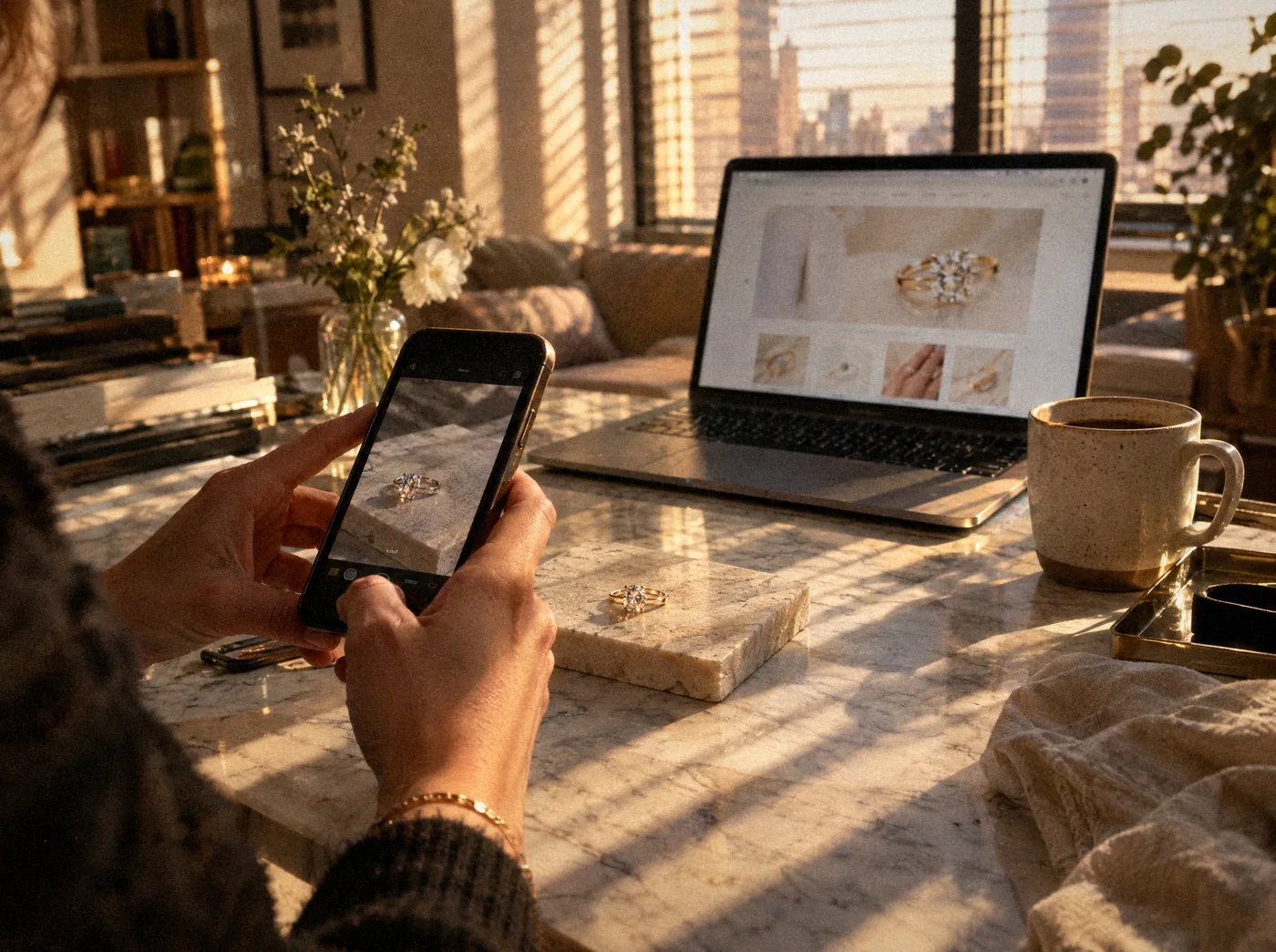
- Shoot your own on-hand images and short videos.
- Show friends, early customers and creators before you spend on launch.
At Grandior, samples start from $259 per piece, in the metal you plan to sell. Whoever you work with, ask whether samples are made to the same standard as production.
5. Set your prices from your full landed cost
Price from what a piece really costs you to deliver, not from what competitors charge. Your landed cost includes:
- Metal by weight at the day's rate
- Stones by carat and quality
- Making, setting and finishing
- Packaging, certificate and inserts
- Shipping, insurance, import duties and taxes
- Payment fees, returns and remakes
Many direct-to-consumer fine jewelry brands start by pricing at roughly 2.5 to 4 times landed cost, then adjust for their market and marketing spend. Whatever multiple you choose, make sure the margin still pays for the ads and creator posts that bring each customer in.
Gold prices move every day. Either review your prices regularly or agree a fixed gold rate with your manufacturer for a set period.
6. Register the business and get compliance right
This varies by country and state, so check with an accountant. In the US the usual steps are:
- Form a business. Many founders use an LLC to separate business and personal liability, and get an EIN from the IRS.
- Open a business bank account and keep business money separate from day one.
- Sales tax. Register for a sales tax permit where you are required to collect tax. Your store platform can calculate it once you are registered.
- FTC Jewelry Guides. Describe metals and stones accurately: lab-grown diamonds labelled as lab-grown, karat stamps that match the metal, and plating described as plating.
- Selling abroad. Some markets have their own rules. In the UK, most gold, silver and platinum jewellery above a minimum weight must be hallmarked before it is sold. Tell your manufacturer where you sell so pieces are marked correctly.
7. Build your online store
Shopify is the fastest way for most new brands to launch; WooCommerce suits founders who already run WordPress. Whichever you choose, every product page needs:
- Studio images from several angles, plus on-hand and lifestyle shots
- Metal, stone, carat and size details buyers search for
- Certificate information for diamonds
- A clear ring size guide
- Shipping, returns and warranty information near the add to cart button
Keep the first collection small. Ten to twenty strong pieces, beautifully photographed, sell better than a hundred average ones.
8. Invest in imagery
Jewelry is bought with the eyes. You need three kinds of images:
- Studio shots on a clean background for product pages and marketplaces.
- On-hand and on-model shots so customers can judge size and style.
- Lifestyle images and short videos for social media and ads.
Traditional shoots are slow and expensive for a brand with many products. AI photography can now place your real piece on a hand or model and in lifestyle scenes, as long as someone checks that the stones, prongs and metal match the real piece.
9. Launch and find your first customers
Pick two channels and do them well before adding more:
- Instagram and TikTok with short videos of pieces being worn.
- Creators in your niche, paid with product or a commission.
- Google with product listings and helpful content, so buyers find you when they search.
- Email, collected from day one with a reason to sign up.
- Wholesale to boutiques once your designs have proven themselves.
Track where every customer comes from, so you know which channel deserves more of your money.
10. Plan fulfillment, packaging and returns
The unboxing is part of the product. Decide early:
- What the box, pouch, card and certificate look like.
- How fast orders leave and how you keep customers updated.
- Your returns window, who pays return shipping and how resizing works.
If your manufacturer ships directly to your customers, make sure every parcel goes out in your packaging with tracking and insurance.
How much does it cost to start a jewelry business?
It depends on your model. A made-to-order brand mainly pays for samples, imagery, a store and marketing, and can start on a small budget. A brand that holds stock also pays for every piece in its range before selling any of it, which multiplies the money needed and the risk.
Spend in this order: samples first, then imagery, then marketing. Leave inventory until your sales data tells you exactly what to stock.
Next step
If you're planning a jewelry brand and want a partner for design, manufacturing and fulfillment, book a 30-minute call. I'll walk you through costs, timelines and what to launch with.
Questions founders ask
How much money do I need to start a jewelry business?
With a made-to-order partner you can start with a few hundred dollars of samples, a simple online store and good photos. Holding your own stock costs far more, because you pay for every piece before anyone buys it. Most of a new brand's budget should go on samples, imagery and marketing, not inventory.
Can I start a jewelry brand without holding inventory?
Yes. A made-to-order or dropshipping manufacturer makes each piece after your customer pays, packs it in your branded box and ships it to them. You pay per order, so there is no stock to buy or store.
Do I need a license to sell jewelry in the US?
There is no special federal license to sell jewelry. You need a registered business, a sales tax permit in the states where you have to collect tax, and you must follow the FTC Jewelry Guides, which cover how you describe metals and stones. Check local rules with an accountant.
Should a new brand sell lab-grown or natural diamonds?
Most new brands start with lab-grown diamonds. They are real diamonds, look identical, cost a fraction of mined stones and have stable prices, which makes your margins predictable. Natural diamonds suit brands whose customers specifically ask for mined stones.
How long does it take to launch a jewelry brand?
With a partner that already has designs, samples and fulfillment in place, a focused founder can launch in about 4 to 8 weeks. Custom designs add design and sampling time.