Short answer
An illustrative story of a Brisbane founder who launched with 7 lab-grown diamond designs and no stock. Pieces are made in India after each customer pays, packed in her branding and dispatched within 7 days of confirmation. As of October 2026, Indian-made jewellery enters Australia at 0% duty under ECTA with a certificate of origin, plus 10% GST.
- Stock bought up front
- None, each piece made per order
- Custom CAD
- From US$55 per design
- Duty on Indian-made jewellery
- 0% under ECTA with proof of origin, 5% general rate (as of October 2026)
- Import GST
- 10% on consignments over A$1,000 (as of October 2026)
In this guide10 sections
Jess wanted to start a jewellery brand without filling her spare room in Brisbane with stock. She works in marketing, knows how to build an audience, and had a folder of rings saved from three years of scrolling. She launched with 7 lab-grown diamond designs, each made in India after a customer paid. This is how it went.
I run my own fine-jewellery brands as well as Grandior, and founders in Australia tend to ask what Jess asked. Is there a minimum? No. Can each piece go in my own box? Yes. Who owns a custom design? You do, once it's paid for. What about duty and GST? That one takes longer, so it gets its own section below.
What did Jess need before she could start a jewellery brand?
A customer, a model and a number. The customer was easy: women in their late twenties and thirties buying a ring or studs for themselves, not waiting for someone to propose. The model took longer.
She priced up wholesale stock first. Buying even three sizes of seven rings in two metals, before she'd sold one, would have taken most of her savings. Then she looked at making pieces to order through a production partner, where the money goes on samples, design and packaging. That was the one she could fund on a marketing salary.
Our guide to how to start a jewellery business in Australia walks through the ABN, business name and setup costs. Jess did those first, over a weekend.
How did she choose designs?
She sent a brief one evening after work and booked a call for early the next morning, before her own workday started.
On the call we went through her price point and her customer. Then she previewed the lookbook, shortlisted by design ID and sent the list through. She chose six ready designs: two solitaire rings, a half-eternity band, round studs, a tennis bracelet and a small pendant. Ready designs are shared across our partner brands, so they aren't exclusive to her.
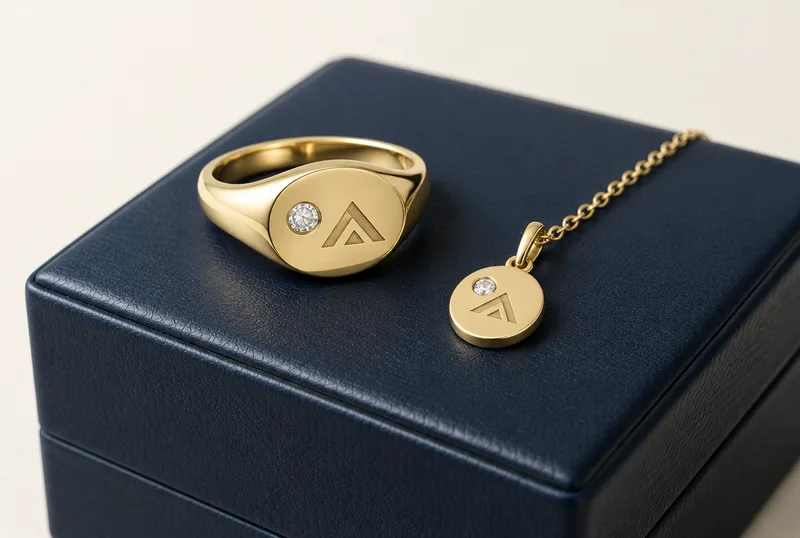
The seventh was hers alone. She'd sketched a low-set oval with a fine split shank on the back of a meeting agenda. It went into CAD, from US$55 per design, and the third render was the one she approved. She owns that CAD once it's paid for.
What did the samples show her?
That her photos needed to change. She ordered samples from US$259 per piece, and the checkout showed import duties and taxes as a separate line, prepaid, so nothing was due when the parcel arrived.
In her hand, the 14K yellow looked warmer than on her screen, and the round studs looked bigger on a real ear than in the product shot. She moved the studs down a size. Her split-shank oval got its own physical sample, which she wore to work for a fortnight.
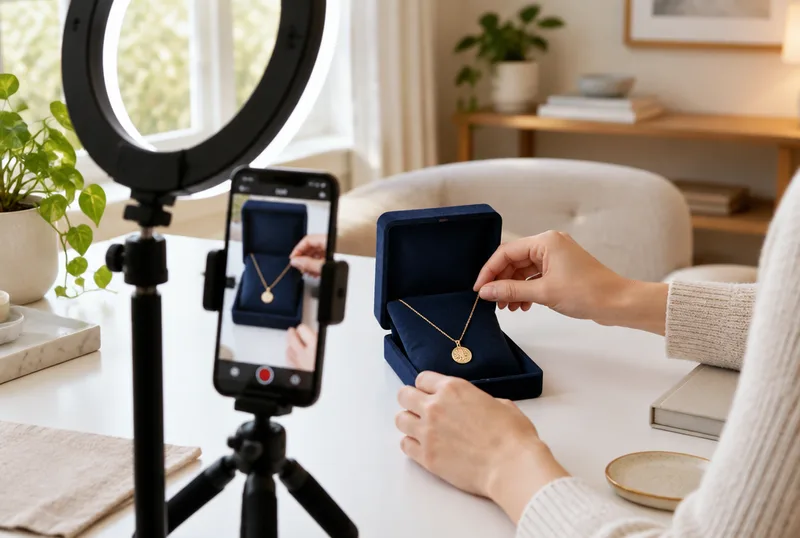
Then she used AI photography to put the pieces on hands and in lifestyle scenes without booking a studio. The starter pack covers 10 products for US$400. She checked every image against the real piece, because a photo that shows the wrong stone is a misleading claim too. See the studio.
What did duty and GST actually come to?
Less than she'd feared. As of October 2026, the general duty rate for jewellery under heading 7113 is 5%, but Indian originating goods enter free under the India-Australia ECTA (ABF tariff, chapter 71). To claim it, the importer must hold a certificate of origin at the time of import (ABF ECTA rules of origin guide).
GST is 10%. The ATO says consignments of A$1,000 or less pay no customs duty or GST at the border; above that, GST is charged at import. Who acts as importer and who pays the GST on production orders is agreed with each brand before the first order. Jess's accountant joined that part of the conversation.
| Cost line | What she used | Where it comes from |
|---|---|---|
| The piece | Quoted per design, line by line, in USD | Grandior quote, converted at her bank's rate |
| Duty | 0% with a certificate of origin, 5% without | ABF tariff and ECTA guide |
| Import GST | 10% on consignments over A$1,000 | ATO |
| Packaging and inserts | Set up once during onboarding | Grandior, US$1,000 onboarding |
| Payment fees | Her Shopify plan's card rate | Shopify |
| Returns, resizes and remakes | A buffer per piece | Her own estimate |
She wasn't registered for GST yet. The ATO says you must register once GST turnover reaches A$75,000, within 21 days (ATO, registering for GST). Her accountant talked her through whether registering early made sense. Our guide to importing jewellery from India to Australia has a worked example in AUD.
What nearly went wrong?
Two lines of product copy.
Her first draft said "diamond studs" in the title and "lab-grown" only in the description. The ACCC says businesses must not mislead consumers, and that it makes no difference whether they meant to (ACCC, false or misleading claims). She rewrote every title to say "lab-grown diamond".
The second was her About page, which said "Australian made". The pieces are designed in Brisbane and made in India. She changed it to exactly that. The ACCC lists false country of origin claims as illegal, and the true version reads better anyway.
How did the first orders run?
Through her own Shopify store, with Instagram doing the talking. She'd thought about Etsy too. Etsy allows production partners only for a seller's own original designs, disclosed on the listing, so only her split-shank oval could go there, made by us as her Etsy production partner. The six ready designs stay off Etsy.
| Week | What happened | Who did it |
|---|---|---|
| 1 | ABN and business name sorted; brief and call | Jess, Nick |
| 1 to 2 | Six ready designs shortlisted; custom oval in CAD | Jess, Grandior |
| 2 to 4 | Samples arrive with duties prepaid; custom sample approved | Grandior, Jess |
| 4 to 5 | Box, pouch, card and certificate artwork set up | Jess, Grandior |
| 5 to 6 | AI photos, product pages, landed cost sheet | Grandior, Jess |
| 7 | Store live, first orders made one at a time | Jess, Grandior |
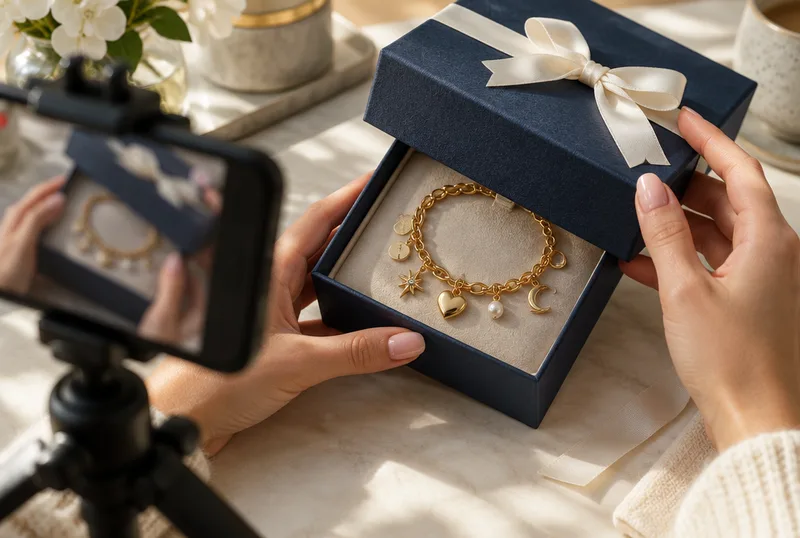
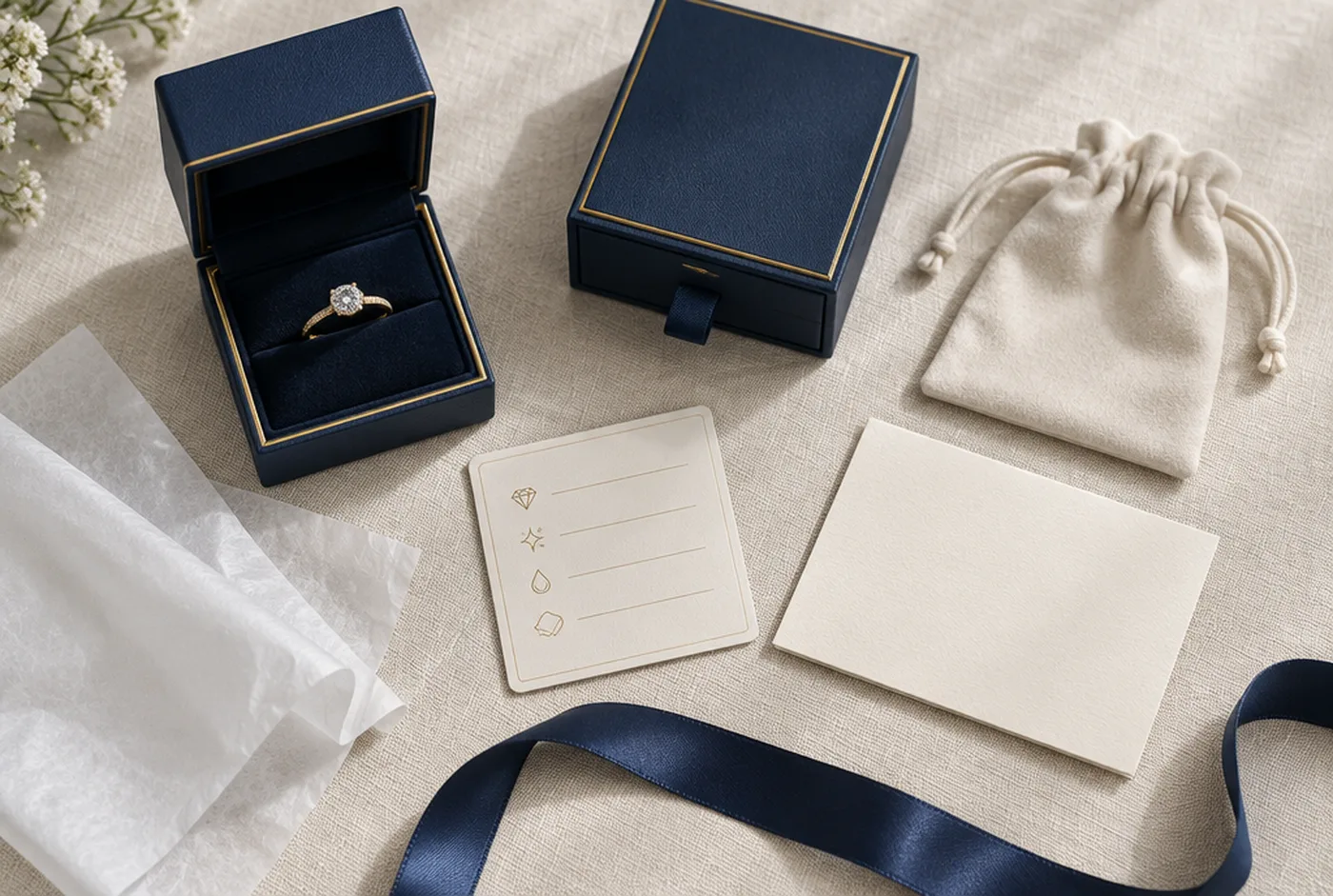
Each order went to production after the customer paid, was checked against her approved sample and was packed in her sage-green box with a card. Ready designs are dispatched within 7 days of confirmation; her custom oval's timeline was confirmed before she listed it. Delivery after dispatch varies by country and prevailing conditions, so her product pages say "made to order" and give the dispatch window, never a date.
What came of it?
The first 12 pieces went out in her packaging over her first month of trading. Two customers asked about sizing, which her size guide now answers. One asked for the oval in rose gold, which meant a new sample before it could go on the store, not a new stock order.
She hasn't bought a single piece of stock. When she adds an eighth design, it's a shortlist, a sample and a product page.
What to copy from this
- Choose a model that needs the least cash before your first sale.
- Launch with mostly ready designs and one custom piece you own.
- Order samples before you shoot or price anything.
- Build a landed cost sheet in AUD, with duty, GST, packaging and fees as separate lines.
- Say "lab-grown diamond" in every title, and say where pieces are made.
- Keep Etsy to your own designs only.
Next step
Book a call to go through designs, samples and landed cost in AUD, or send a brief with your niche and price point. If you want to see the range first, sign up to preview the lookbook.
Questions founders ask
Can you start a jewellery brand in Australia with no stock?
Yes. With a made-to-order production partner, each piece is made after your customer pays and shipped in your packaging. You pay for samples, any custom design work and setup, not for stock.
Is there duty on jewellery imported from India to Australia?
As of October 2026, jewellery under heading 7113 has a 5% general rate, but Indian originating goods enter at 0% under the India-Australia ECTA when the importer holds a certificate of origin. Import GST of 10% applies to consignments over A$1,000.
Do I need to register for GST to sell jewellery?
You must register once your GST turnover reaches A$75,000, within 21 days. Below that it's optional. Ask your accountant whether registering early suits you.
What is landed cost for a jewellery brand?
Everything it costs to get one piece to your customer: the piece itself, shipping and insurance, any duty and GST, packaging, local postage, payment fees and an allowance for returns and remakes. Price from landed cost, not from competitors.
Can I call my jewellery Australian made if I design it here?
Not if it's made overseas. The ACCC says false or misleading country of origin claims are illegal. "Designed in Brisbane, made in India" is accurate.
Is this a real brand?
No. The founder and her brand are invented to show how the process works. The steps, options, official rules and Grandior prices shown are real.
Sources
Checked on October 31, 2026. Rules and rates change, so confirm with the source before you rely on a number.
- ABF, Customs tariff Schedule 3, chapter 71abf.gov.au
- ABF, Australia-India ECTA rules of origin guideabf.gov.au
- ATO, Australian business importing goods and servicesato.gov.au
- ATO, Registering for GSTato.gov.au
- ACCC, False or misleading claimsaccc.gov.au
Get new guides by email
Practical guides for jewelry brands, from what we see on real orders. Only new guides; unsubscribe any time.