Short answer
Young US buyers want lab-grown diamonds (61% of 2025 engagement rings), diamonds for milestones beyond bridal, personal pieces such as initials and charms, stackable rings, everyday studs and pendants, and bold gold. They research on social media. Launch small, test designs one piece at a time and keep the winners.
- Lab-grown center stones
- 61% of US engagement rings in 2025 (The Knot)
- Gen Z share of natural diamond demand value
- 23%, against 18% of the population (De Beers)
- Non-bridal share of US diamond demand
- About three-quarters (De Beers)
- Jewelry self-gift sales
- Up 58% since 2021 (State of Fashion 2026)
In this guide11 sections
Most brands still picture the diamond buyer as someone shopping for an engagement ring. The data says otherwise. The main gen z jewelry trends for 2026 and 2027: lab-grown diamonds (61% of 2025 US engagement rings had a lab-grown center stone), diamonds for milestones beyond weddings, initials and charms, stacking, everyday studs and pendants, and bolder gold, all found on social first.
I run my own fine-jewelry brands as well as Grandior. "What should we launch first?" comes up on a lot of our calls, and my honest answer is usually: fewer pieces than you think. This guide sticks to trends with current trade data behind them, so you can plan a range on evidence instead of a hunch.
What are the main gen z jewelry trends for 2026?
Seven have current, sourced data behind them. The table maps each one to a range decision and a style you can start from in our lookbook.
| Trend | The data | What it means for your range | Lookbook style to start from |
|---|---|---|---|
| Lab-grown diamonds | 61% of 2025 engagement rings had a lab-grown center stone (The Knot) | Lead with lab-grown; label it clearly | Solitaire, hidden halo and oval halo rings |
| Milestone buying | About three-quarters of US diamond demand is non-bridal (De Beers) | Build for birthdays, promotions and self-gifts | Solitaire studs and tennis bracelets |
| Self-purchase | Jewelry self-gift sales up 58% since 2021 (State of Fashion 2026) | Price and photograph for the buyer, not only the gift giver | Halo and cluster studs, solitaire pendants |
| Personalization and initials | Gen Z "likes to personalize things" (Stuller, via JCK) | Offer engraving or initials on core pieces | Solitaire pendant with an engraved back |
| Charms | "Charms and charm necklaces have become such a big thing with Gen Z" (JCK) | Add a small charm line that customers combine | Charm bracelet; motif pendants |
| Stacking | Stackable birthstone rings work as milestone rings (JCK) | Sell bands in sets and in several metals | Eternity bands and wedding bands |
| Bold gold | "Gold cuff" searches up 50%, "'80s luxury" up 225% (Pinterest via National Jeweler) | Add one or two statement pieces in yellow gold | Cuffs, bangles and cocktail rings |
Why are lab-grown diamonds the default for younger buyers?
Because they've already won the purchase young buyers spend most on: the engagement ring. The Knot's 2026 Real Weddings Study found that 61% of rings bought by couples married in 2025 had a lab-grown center stone. Forty percent of couples said it was important that their stone be lab-grown.
It doesn't stop at bridal. The State of Fashion 2026 report from BoF and McKinsey, as summarized by JCK, puts lab-grown at nearly 20% of global diamond jewelry sales and says it could reach 50% by 2030. Analyst Edahn Golan's May 2026 market presentation says lab-grown demand is shifting to fashion jewelry, with unit sales falling above $5,000.
Natural hasn't gone anywhere, though. De Beers reports lab-grown was 15% of diamond sales value at US independent jewelers in 2025. Know which buyer you're building for.
Are young buyers still buying diamonds outside bridal?
Yes, and more than older buyers do. A De Beers study of 18,500 US women, released in June 2026, found Gen Z is now the second-largest generation buying diamonds. They make up 23% of natural diamond demand value but 18% of the population.
Non-bridal occasions are about three-quarters of US demand. De Beers says new jobs, promotions, achievements and "just because" purchases increasingly drive buying. Birthdays are 17% of Gen Z diamond acquisitions, against 13% across all generations.
Self-purchase is climbing too. State of Fashion 2026 reports jewelry self-gift sales up 58% since 2021. A BriteCo survey from December 2025 found 80% of US adults buy fine jewelry for themselves. Over a third of Gen Z respondents prefer to spend under $500 on a self-purchase, and 35% prefer necklaces.
So give people a reason to buy now, for themselves. A birthday stud. A first-promotion pendant. A bracelet for the year they paid off their loans.
Why do personalization, initials and charms matter?
Because the piece has to say something about the person wearing it. JCK's December 2025 report on what Gen Z wants quotes Stuller's fine jewelry product manager: "Gen Z likes to personalize things." Initial pendants and engravable pieces answer that directly.
The same report says charms and charm necklaces "have become such a big thing with Gen Z". Charms work because every customer builds their own mix, and a brand can add new charms each season without touching the core range. A simple charm bar on your own site (pick a chain, add two or three charms) turns one order into a collection the buyer keeps adding to.
Made one at a time, personalization is easy to offer. Engraving, initials, dates and birthstones are added per order. Custom work can take longer, so timelines are confirmed per order. Custom CAD at Grandior starts from $55 per design; see custom jewelry manufacturing.
Is stacking still a trend?
Yes. JCK reports stackable birthstone rings are selling well and can work as milestone rings, such as adding a spouse's birthstone. They now come in sterling silver and 10K gold for lower price points.
Stacking also suits a brand's numbers. One buyer can add a band every year. Rings were the most popular self-purchase in the BriteCo survey, chosen by 31% of respondents.
Keep bands in one width family so they sit flush together. Offer them in 925 silver, gold vermeil and 10K, 14K or 18K gold, so a buyer can mix a silver band with a gold one and stay in budget.
Should you launch minimal everyday pieces or bold statement pieces?
Both, doing different jobs. Everyday classics are the core. JCK reports diamond studs and solitaire pendants remain popular, and lower lab-grown prices have people buying them for their children.
Statement pieces give the range a pulse. Pinterest's 2026 trend report, covered by National Jeweler, says jewelry "will get chunkier, bolder, and golder". Searches for "gold cuff" were up 50% and "'80s luxury" up 225%.
A split that works: most of the range in everyday studs, pendants and bands, plus a few bold cuffs, cocktail rings or tennis bracelets. The bold pieces are the ones that stop a scroll, so they earn their place even if they sell fewer units.
Do young buyers care where their jewelry comes from?
A growing share do. A Plumb Club survey of 2,000 US jewelry consumers aged 25 to 60, reported by Rapaport in April 2025, found 30% said origin traceability is important, up from its 2023 survey. That age range covers younger millennials but not the youngest Gen Z buyers.
What they respond to is proof, not slogans. Give a grading report for each center stone, state the metal and karat, and name lab-grown stones plainly. Skip broad eco claims you can't document. Grandior uses certified lab-grown diamonds, and every order is dispatched within 7 days of confirmation.
Where do Gen Z buyers find jewelry?
On social. De Beers found Gen Z leans on social media more than any other generation when researching what to buy.
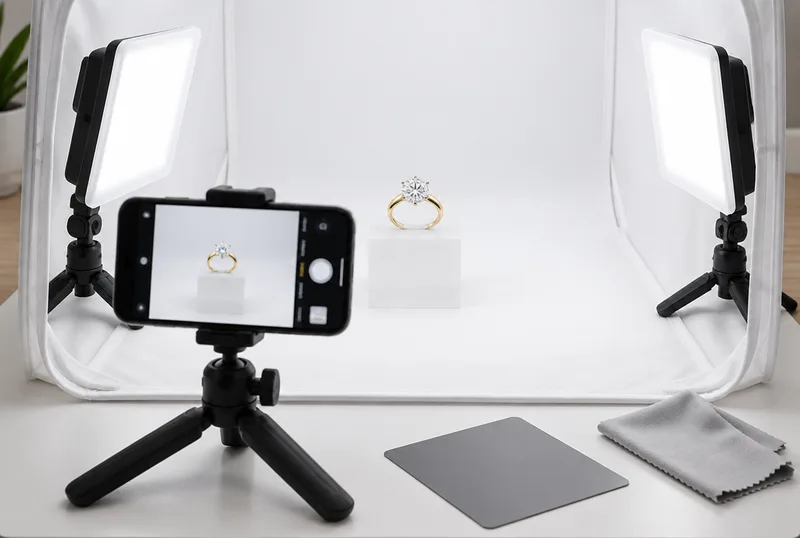
That changes what "ready to launch" means. Every piece needs a clean product shot, on-hand photos and a short video before it goes live, because many buyers meet the piece in a feed before they ever reach your product page. Our AI product photography studio makes these from your pieces, with videos from $20 per product. Selling on Etsy? Read how we work as an Etsy production partner.
How do you turn gen z jewelry trends into a range?
Start small and let sales pick the winners. Trends turn quickly, and deep stock is how brands get stuck with last year's look.
- Pick a core of everyday pieces: studs, a solitaire pendant and two or three bands.
- Add one personal line: initials, engraving or birthstones.
- Add one or two bold pieces in yellow gold.
- Label every stone and metal correctly.
- Order samples of your top designs to check quality. Samples start from $259.
- Sell made to order with no minimum, and move proven designs to small runs later.
Our guide to low-MOQ jewelry manufacturing covers the trade-offs, and what it costs to start a lab-grown diamond jewelry brand covers the budget.
Next step
Browse the lookbook and shortlist the studs, bands, pendants and bold pieces that fit these trends. Then book a call and I'll help you cut it down to a first range.
Questions founders ask
What jewelry is trending with Gen Z?
Lab-grown diamonds, personal pieces such as initial pendants and charms, stackable rings, classic studs and solitaire pendants, and chunkier gold. Trade reports from JCK, The Knot, De Beers and Pinterest all point the same way for 2026.
Do Gen Z prefer lab-grown diamonds?
Lab-grown is now the majority choice for engagement rings. The Knot's 2026 Real Weddings Study found 61% of rings bought by couples married in 2025 had a lab-grown center stone. Natural diamonds still sell, and De Beers reports Gen Z is now the second-largest generation buying them.
Does Gen Z buy fine jewelry?
Yes. De Beers reports Gen Z accounts for 23% of US natural diamond demand value while making up 18% of the population. JCK reports Gen Z wants fine jewelry when the style and the price both fit.
Where does Gen Z shop for jewelry?
They research on social media more than any other generation, according to De Beers. For a brand, that means product photos and short videos matter as much as the product page.
What jewelry should a new brand launch for Gen Z?
Start with a small, focused range. Everyday studs and pendants, a few stackable bands, a personal piece such as an initial pendant, and one or two bold pieces. Test each design with real buyers before you invest in stock.
Sources
Checked on October 31, 2026. Rules and rates change, so confirm with the source before you rely on a number.
- The Knot 2026 Real Weddings Study (press release, 18 February 2026)businesswire.com
- De Beers Group: latest research on US consumer trends (29 June 2026)malaymail.com
- JCK: Why jewelry may become fashion's fastest-growing category (State of Fashion 2026)jckonline.com
- JCK: What Gen Z wants now (8 December 2025)jckonline.com
- National Jeweler: Pinterest 2026 trend report (5 January 2026)nationaljeweler.com
Get new guides by email
Practical guides for jewelry brands, from what we see on real orders. Only new guides; unsubscribe any time.