Short answer
A low-MOQ jewelry manufacturer makes from 1 piece per design, usually after your customer pays. You avoid buying stock, but each piece costs more than in a bulk run. At Grandior there is no minimum, samples start from $259 and every order is dispatched within 7 days of confirmation.
- Minimum order
- 1 piece, no minimum
- Ready designs
- 500+ in the lookbook
- Custom CAD from
- $55 per design
- Dispatch
- Within 7 days of confirmation
In this guide9 sections
A low MOQ jewelry manufacturer lets you order from 1 piece per design instead of a full production run. The piece is made after your customer pays, so you buy no stock. The trade-off is a higher cost per piece than a bulk run and a short wait on every order. For most new brands that is the right trade.
I run my own fine-jewelry brands as well as Grandior. Minimum orders are the first thing most brands ask us about. We have none.
What does MOQ mean in jewelry manufacturing?
MOQ means minimum order quantity: the smallest number of pieces a maker will produce in one order. In jewelry it is usually set per design. Some makers also set it per metal, per colour or per size, so "50 pieces" can mean 50 of one ring in one metal, not 50 pieces in total.
Read the MOQ line closely. A low headline number can hide a minimum per colour or per ring size. Ask how the minimum is counted before you compare quotes.
Why do jewelry factories set minimums?
Factories set minimums because most of their cost sits in setup, not in the piece itself. Making one ring takes almost the same preparation as making fifty. The minimum spreads that cost across enough pieces to make the run worth it.
The main cost drivers:
- Rubber molds. A bulk run starts with a master model and a rubber mold, which is then used to inject many wax copies. The mold costs the same whether it makes 5 waxes or 500.
- Casting trees. In lost-wax casting, wax models are attached to a central sprue to form a "tree", set in plaster, burned out and filled with metal. A full tree costs little more to cast than a half-empty one.
- Stone lots. Stones are bought and matched in parcels by size and colour. A small order may need a separate purchase or extra matching time.
- Setup and finishing. Plating baths, polishing runs, quality checks and packaging all have a fixed setup per batch.
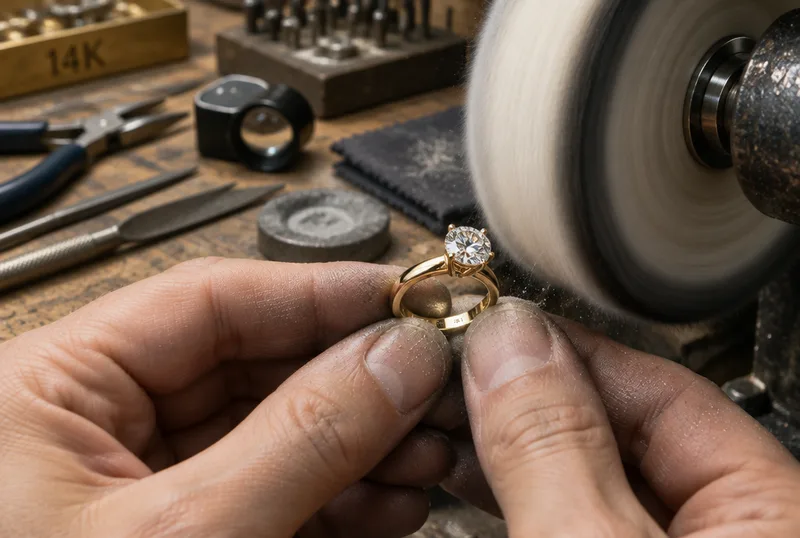
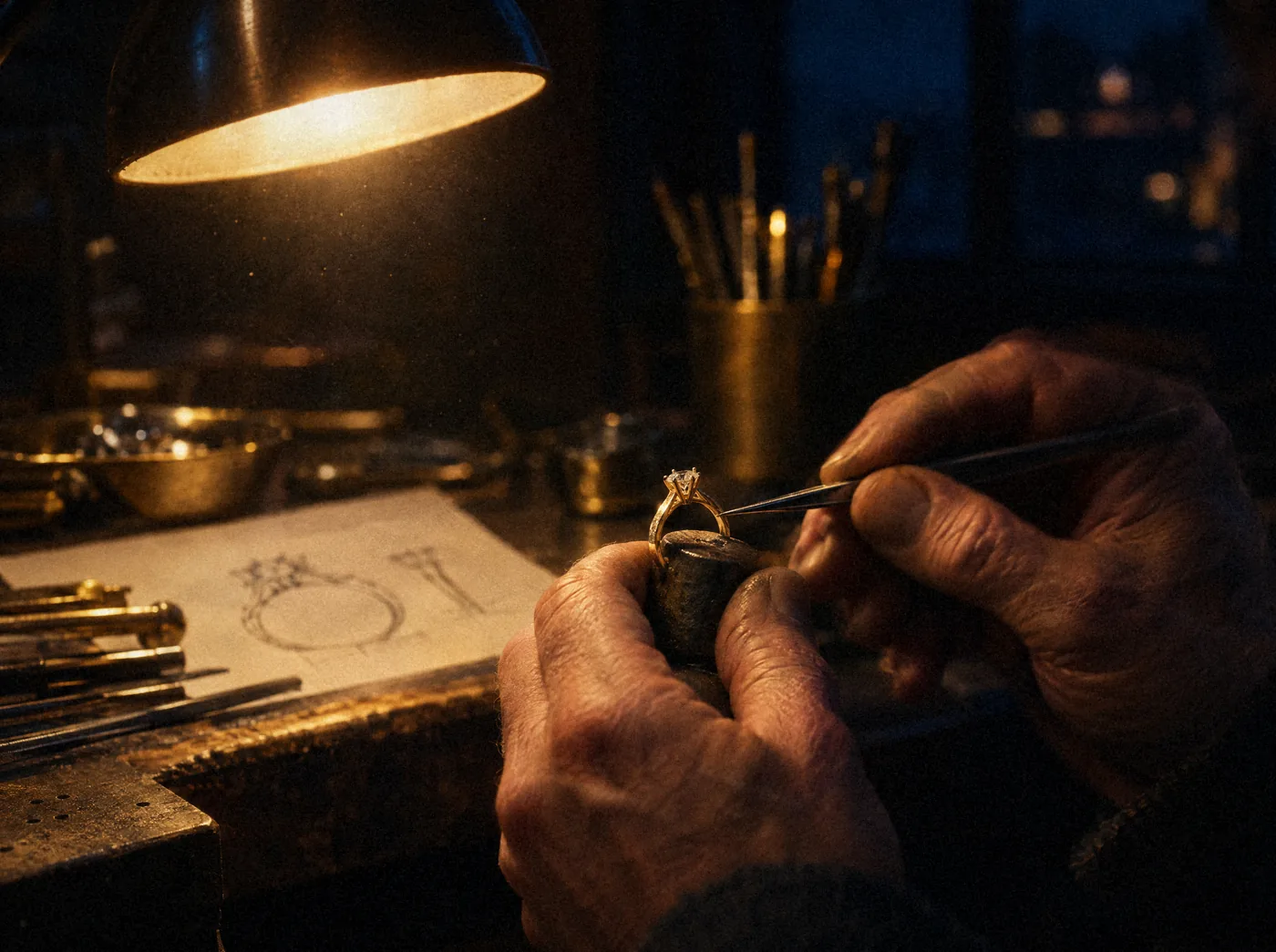
A made-to-order partner works around this. It can 3D print the model directly from CAD, skip the rubber mold, and cast your piece on a shared tree with other orders. That is what makes one piece possible.
Which manufacturing model fits your brand?
The right model depends on how sure you are about demand. If you have not sold a design yet, start with the model that asks for the least money up front.
| Model | Minimum order | You pay up front for | Cost per piece | Stock risk | Best when |
|---|---|---|---|---|---|
| Bulk factory run | Set per design, often per metal and colour | The whole run, plus molds | Lowest | High: you own every piece | Demand is proven and steady |
| Small-batch workshop | A small run per design | The batch | Middle | Medium | You know a design sells and want some stock |
| Made-to-order partner | 1 piece | Samples and any CAD | Higher | None | You are launching or testing designs |
| Print-on-demand app | 1 piece | Usually nothing | Varies | None | You sell simple personalized pieces from a fixed catalog |
Print-on-demand apps are the easiest to start with. The catalog and the metal specification are set by the app, so you have less control over materials, finish and packaging. Check exactly what metal and plating you are selling before you list.
What does making one piece at a time cost you?
Making one piece at a time costs more per piece and adds a short wait to every order. It costs you nothing in unsold stock. For a new brand, the second point usually matters more than the first.
When a design sells steadily, you can move it to a small run. Until then, made to order protects your cash. Our guide on how to start a jewelry business covers how this fits into a launch budget.
What should you ask a low MOQ jewelry manufacturer?
Ask every maker the same questions and get the answers in writing. The answers tell you more than a catalog does.
- Can I buy samples? Hold the real piece before you list it. Samples should be made to the same standard as production.
- Are stones certified and labelled correctly? Diamonds should come with a grading report from a lab such as IGI or GIA. Lab-grown diamonds must be described as lab-grown, and the FTC Jewelry Guides set how you can describe metals and stones in the US.
- Is pricing line by line? Ask for metal, making, stones, setting and finish separately. Then you can see what moves when the gold price changes.
- Who owns the CAD? Custom designs should belong to your brand once paid for. Get it in writing.
- Can you ship in my packaging? Your customer should see your brand, not the maker's.
- What is your dispatch time? Ask for a dispatch commitment, not a delivery date. Delivery after dispatch depends on the country and prevailing conditions.
- Will you sign an NDA? You should not have to share designs without one if you want one.
- What happens with defects and remakes? Agree who pays before the first order.
What are the red flags?
The biggest red flag is a maker that will not put specifics in writing. Watch for these:
- No samples for sale. If you cannot buy one piece to check, you cannot judge quality.
- Vague metal descriptions. Under the FTC Guides, "gold" should be preceded by the karat, such as 14K, and plating should be described as plating (16 CFR 23.3).
- Loose stone language. A lab-grown stone sold as plain "diamond", or moissanite called a diamond. The FTC defines what can be called a diamond and requires a clear lab-grown disclosure.
- One lump price. No breakdown means you cannot check it or plan for gold price moves.
- Exact door-to-door promises. No one controls customs and carriers in every country.
- Unclear CAD ownership. If the maker keeps your design, it can sell it to others.
- Pressure to buy stock. A low-MOQ partner should not push you into a bulk order before you have sales.
How does Grandior work as a low MOQ jewelry manufacturer?
Grandior has no minimum order. You can start with one piece from a ready design or from your own custom design.
| What | From |
|---|---|
| Minimum order | 1 piece |
| Ready designs in the lookbook | 500+ |
| Custom CAD, per design | $55 |
| Complex custom CAD | $250 |
| 925 silver samples | $259 |
| Solid gold samples | $319 |
| Dispatch | Within 7 days of confirmation |
We make in 925 sterling silver, gold vermeil and 10K, 14K or 18K gold, with certified lab-grown diamonds. Each order ships in your branded packaging, tracked and insured, to your customer. Custom designs belong to your brand once paid for, and we sign an NDA before you share anything if you want one. Production prices are quoted per design, line by line.
Choose ready designs if you want to launch fast. See custom jewelry manufacturing if you want pieces no one else sells. If you are unsure which metal to sell, read our comparison of gold vermeil vs gold filled vs plated. Brands selling on Etsy should read how we work as an Etsy production partner.
Next step
Order a sample in the metal you plan to sell, or send a brief for a custom design. If you want to talk it through first, book a call and I will walk you through costs and timelines.
Questions founders ask
What is a good MOQ for a new jewelry brand?
For a brand that has not sold yet, the best MOQ is one piece per design. It lets you test designs with real customers before you put money into stock. Move to small runs only for pieces that already sell steadily.
Why do jewelry factories have minimum order quantities?
Most of a factory's cost sits in setup, not in the single piece. Rubber molds, casting trees, stone lots, plating baths and finishing time cost about the same for one piece as for many, so a minimum spreads that cost across the run.
Is made-to-order jewelry more expensive per piece?
Usually, yes. You pay for setup on every piece instead of sharing it across a batch. In return you buy nothing before a customer pays, so you carry no unsold stock.
Can I get custom jewelry made with no minimum order?
Yes. A made-to-order partner works from your CAD file and casts one piece at a time. At Grandior custom CAD starts from $55 per design, and the design belongs to your brand once it is paid for.
How long does a made-to-order jewelry piece take?
It depends on the partner and the design. Grandior dispatches every order within 7 days of confirmation. Custom and personalized work can take longer, so timelines are confirmed per order. Delivery after dispatch varies by country.
What should I ask a jewelry manufacturer before ordering?
Ask about samples, certificates, line-by-line pricing, who owns the CAD, branded packaging, dispatch time and whether they will sign an NDA. Get the answers in writing.
Sources
Checked on October 21, 2026. Rules and rates change, so confirm with the source before you rely on a number.
Get new guides by email
Practical guides for jewelry brands, from what we see on real orders. Only new guides; unsubscribe any time.