Short answer
Jewelry finishing is the work done after casting. It covers cleaning up casting marks, pre-polishing, setting stones, the final polish, plating, texture, engraving and marks. Judge it on a sample with a 10x loupe, a cotton thread over the prongs and a daylight color check. Grandior checks every piece against the client's approved sample.
- Steps after casting
- Clean-up, pre-polish, setting, final polish, plating, marks
- Vermeil gold layer
- At least 2.5 microns of 10K or better gold (FTC, October 2026)
- Sample tools
- A 10x loupe, a cotton thread, daylight
- Grandior samples
- Same metal, stones and finish as production
In this guide11 sections
Two rings can be cast from the same CAD file, in the same 14K gold, and still look like they came from different workshops. The difference is jewelry finishing: the clean-up, pre-polish, setting, final polish, plating, texture and marks that happen after casting. You can judge all of it on one sample with 3 tools: a 10x loupe, a cotton thread and daylight.
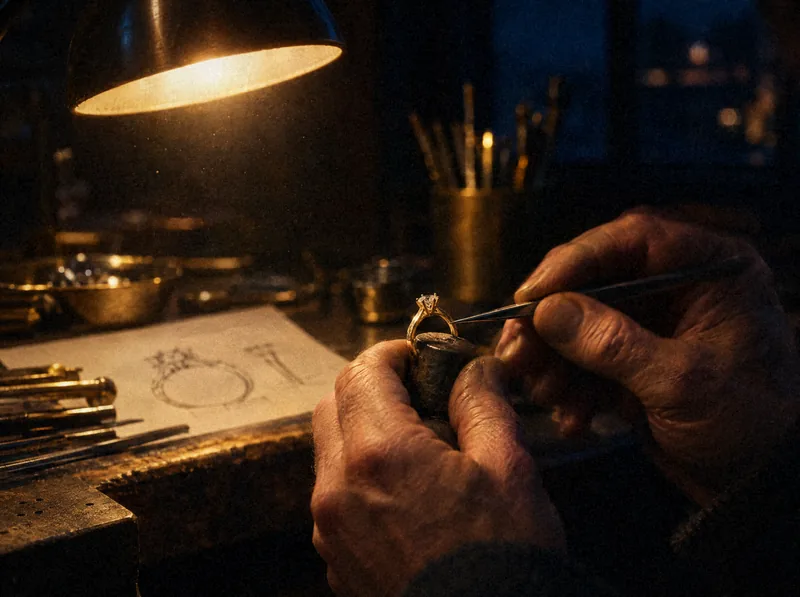
I run my own fine-jewelry brands as well as Grandior, so I look at samples as a buyer too. The front of a ring is what the photo shows, and most workshops get the front right. Turn it over. The inside of the band, the underside of the setting and the joins are where you see who took their time.
What is jewelry finishing?
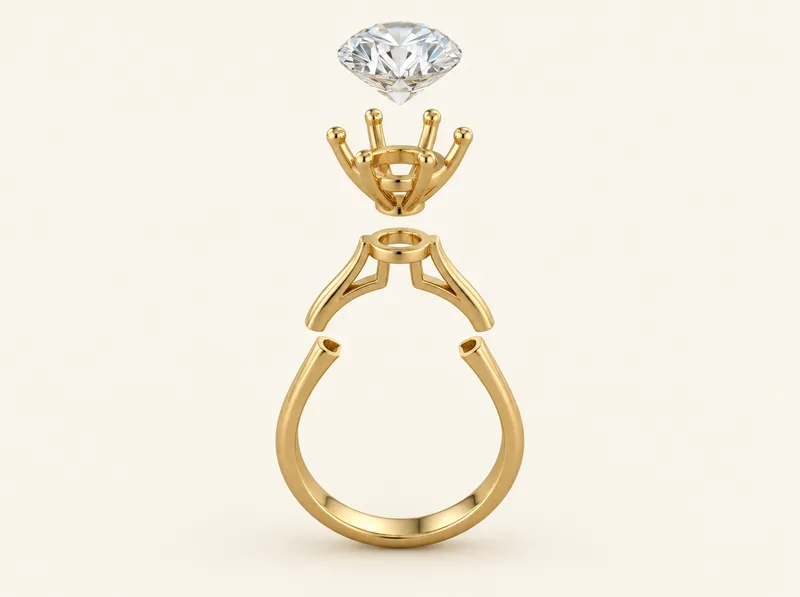
It's everything the bench does to turn a rough casting into something you'd sell. A casting comes out of the flask dull and grainy, with sprues (the metal channels that fed the mold) still attached. Finishing cuts those off, files and sands the surface true, and brings it up to a mirror polish or a deliberate texture.
For a brand, this is the stage customers actually feel. They judge quality with their fingers as much as their eyes. A band that feels gritty inside, or a prong that pulls a thread on a sweater, reads as cheap no matter what stone sits on top.
New to the terms? Our guide to the parts of a ring covers shank, gallery, head and prongs.
What are the finishing steps after casting?
The usual order is clean-up, pre-polish, setting, final polish, then plating, texture and marks. Each step fails in its own way, and a good QC check knows what to look for at each one.
| Step | What it does | What goes wrong |
|---|---|---|
| Sprue and casting clean-up | Cuts off sprues and files away casting marks and flashing | Flat spots, bumps where the sprue was, porosity left in place |
| Pre-polish | Smooths the metal before stones go in, while every surface can still be reached | Pits opened up by polishing, rough areas under the setting |
| Setting | Secures each stone with prongs, bezels, channels or pavé beads | Loose or tilted stones, uneven prongs, chipped stones |
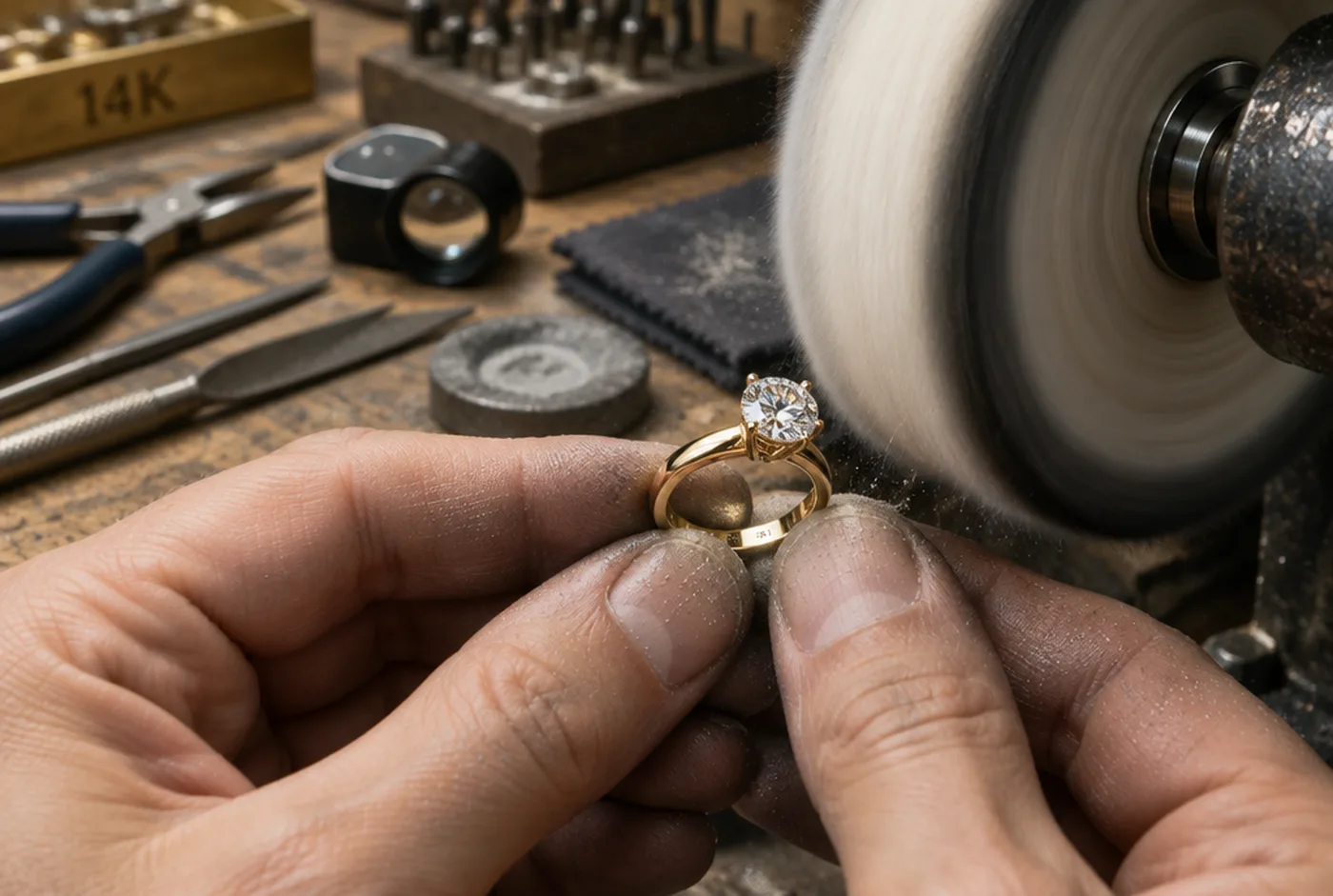
| Final polish | Brings the surface to a high shine or prepares it for texture | Rounded edges, washed-out detail, tool marks, polish residue in corners |
| Plating | Rhodium on white gold, gold on vermeil | Patchy or thin areas, color drift between pieces |
| Texture | Satin, brushed, hammered or matte areas | Uneven texture, texture spilling onto polished areas |
| Engraving and marks | Text, logos, quality marks and maker's marks | Shallow or blurred lettering, marks in the wrong place |
Pre-polish is the step people underrate. Once stones are set, the polisher can't reach under the head without risking them. Whatever was left rough there stays rough.
Which defects show a poor finish?
Most of them show up under a loupe or a fingertip. Look for these on any sample:
- Porosity and pits. Tiny holes from gas or shrinkage in the casting. Polishing opens them up.
- Uneven plating. Patches where the base metal shows, usually on edges and inside the band.
- Loose stones. A stone that moves, rattles or sits tilted.
- Sharp prongs. Tips that catch on fabric or skin.
- Rough inner shank. File marks or a dull, gritty surface inside a ring.
- Visible solder seams. A line or a color change where parts were joined.
- Mismatched color. Earrings or set pieces in slightly different shades of gold.
How should plating be done, and how thick should it be?
Evenly, over every significant surface, in a karat and thickness someone is willing to put in writing. Two kinds matter most for fine jewelry brands.
Rhodium on white gold. White gold alloys are often slightly warm in color, so many makers give them a rhodium dip for a brighter white. The plating wears with use and can be redone. Ask your manufacturer whether white gold is plated and how replating is handled, because your customers will ask you.
Gold on vermeil. The FTC Jewelry Guides set the US rules. As of October 2026 (eCFR text current to October 22, 2026):
| Term | Base | Gold layer | Rule |
|---|---|---|---|
| Vermeil | Sterling silver | At least 10K, at least 2.5 microns of fine gold | 16 CFR 23.4 |
| Gold electroplate | Any base metal | At least 10K, at least 0.175 microns of fine gold | 16 CFR 23.3 |
| Heavy gold electroplate | Any base metal | At least 10K, at least 2.5 microns of fine gold | 16 CFR 23.3 |
Under 23.4, sterling silver covered with a base metal such as nickel and then gold-plated cannot be called vermeil without saying so. Get the base, karat and thickness in writing. For the trade-offs between the three, read gold vermeil vs gold filled vs plated.
Which surface textures can you choose?
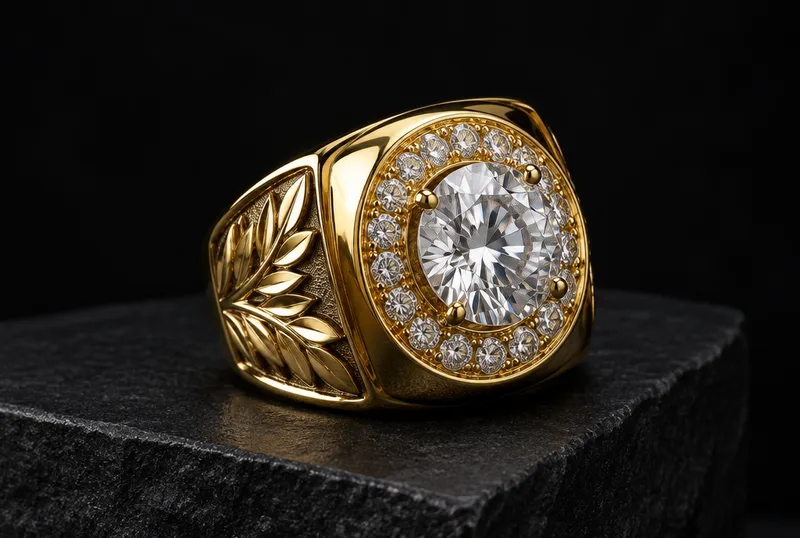
High polish, satin or brushed, hammered, or sandblasted matte, on their own or mixed on one piece.
- High polish. A mirror. It shows every scratch, and every flaw an earlier step left behind.
- Satin or brushed. Fine parallel lines with a soft sheen. The lines should all run one way.
- Hammered. Small facets that catch light and hide wear. The pattern should be even all the way round.
- Sandblasted or matte. A flat, frosted look. Matte areas tend to polish up where they rub, so tell customers how the piece will age before they find out.
When a design mixes textures, the border should be crisp. A fuzzy line between satin and polish is a shortcut you can see from across a table.
How are engraving and hallmarks done?
By hand, by machine or by laser. Laser handles fine logos and small text well. Check that letters are sharp, evenly deep and readable without a loupe, and that the engraving doesn't sit where the ring rubs most.
Marks are rules, not decoration. In the US, as of October 2026, a maker or dealer who puts a gold or silver quality mark such as 14K or 925 on an article must also put on its own trademark, registered or applied for, under 15 U.S.C. 297. In the UK, items sold as gold, silver, platinum or palladium must be hallmarked, with exemptions under 1 g for gold and 7.78 g for silver, per the British Hallmarking Council's dealer's notice. Ask your manufacturer which marks go on and where.
How do you check jewelry finishing on a sample?
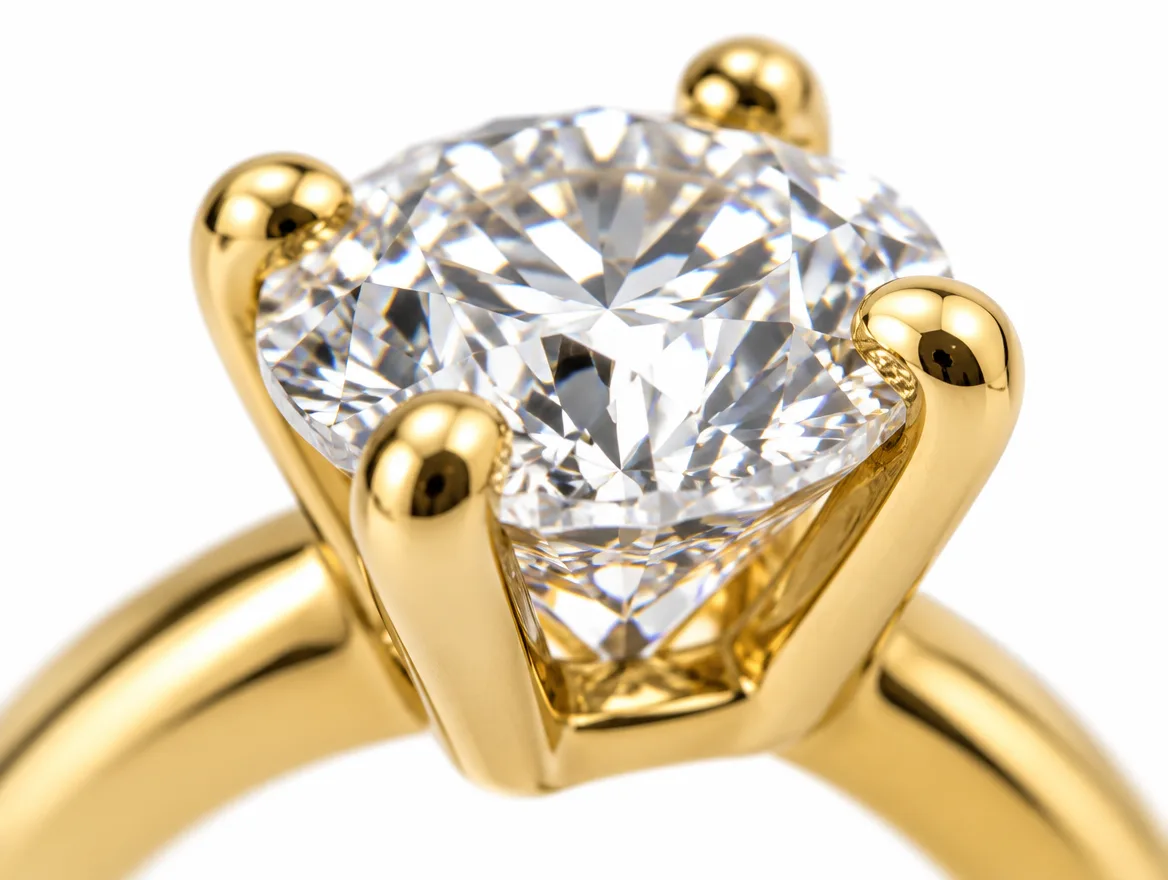
Start with the parts nobody photographs. A loupe, a thread and a window are all you need. This is the checklist we'd hand any brand, creator or corporate buyer judging a manufacturer, including us.
| What to check | How to check it | What good looks like |
|---|---|---|
| Inner shank | Look inside the band with a 10x loupe | Smooth, evenly polished, no file marks or pits |
| Prong tips | Run a cotton thread or fingertip over each prong | Nothing catches; tips rounded and even |
| Stone security | Tap gently near your ear and look side-on | No rattle or movement; stones level |
| Gallery and underside | Loupe under the setting | Clean metal, no polish residue or rough spots |
| Porosity | Loupe across flat and polished areas | No pits or pinholes |
| Solder joins | Loupe at jump rings, bails, clasps and joins | No visible seam or color line |
| Plating | Check edges, inside the band and under the setting | Even color, no patches of base metal |
| Color match | Lay pairs and set pieces side by side in daylight | Same shade of gold across every piece |
| Engraving and marks | Read them with and without a loupe | Sharp, even, correctly placed |
| Clasp and catch | Open and close it ten times | Smooth action, closes firmly every time |
How does Grandior check finishing on every piece?
Every production piece is checked against the client's approved sample before it ships. Pieces are cast, set, polished and finished in partner workshops in India. Samples are made with the same metal, stones and finish your customers will receive, and they go through the same check before dispatch. Stones are matched for pairs and sets.
That's why a sample is worth the money before you commit. Order a sample to check quality, run the checklist, and approve it only when you'd be happy to sell it. For a custom design, the CAD and a physical sample come first; see custom jewelry manufacturing.
What should you ask a manufacturer about finishing?
Ask questions that get answers in writing, not adjectives:
- Is each piece checked against my approved sample, and what happens if it fails?
- What base, karat and thickness is the plating, and on which surfaces?
- Is white gold rhodium plated, and how is replating handled?
- Which marks go on, and is there room for my logo?
- How are stones matched in pairs and sets?
A supplier who answers "premium quality" to all five has told you something. The same checks apply to corporate gifts and merch; see luxury corporate gifts and how to make merch.
Next step
Order a sample to check quality and run the checklist on it. If you want to talk through finish, plating or marks for your own design, book a call.
Questions founders ask
What does finishing mean in jewelry making?
Finishing is everything done to a piece after it is cast. The workshop removes casting marks, smooths and polishes the metal, sets the stones, adds plating or a texture, engraves and stamps it. Most of what a buyer sees and feels comes from this stage.
How can I tell if jewelry is well finished?
Look at the hidden parts, not the front. Use a 10x loupe on the inside of the band, under the setting and along joins. Run a cotton thread over the prongs; it should not catch. Compare the color of matching pieces in daylight.
Why is white gold rhodium plated?
White gold alloys are often slightly warm in color, so many makers plate them with rhodium for a brighter white. The plating wears with use and can be redone. Ask your manufacturer whether pieces are plated and how replating is handled.
How thick should gold vermeil plating be?
In the US, as of October 2026, the FTC Jewelry Guides say vermeil needs a sterling silver base and gold of at least 10 karat, at least 2.5 microns thick. Ask your manufacturer to state the karat and thickness in writing.
What causes pits and porosity in cast jewelry?
Porosity is small holes left by trapped gas or shrinkage during casting. Polishing can open them up as pits. A good workshop rejects or repairs porous castings before setting stones, so check a sample for pits under a loupe.
Should a jewelry sample have the same finish as production?
Yes. A sample is only useful if it matches what your customers will get. Grandior samples are made with the same metal, stones and finish as production, and production pieces are checked against the approved sample.
Sources
Checked on October 31, 2026. Rules and rates change, so confirm with the source before you rely on a number.
- FTC Jewelry Guides, 16 CFR 23.4, Misuse of the word vermeilecfr.gov
- FTC Jewelry Guides, 16 CFR 23.3, Misrepresentation as to gold contentecfr.gov
- 15 U.S. Code 297, Stamping of gold and silver articles with trademarklaw.cornell.edu
- British Hallmarking Council, Dealer's Notice for online sellerstheassayoffice.co.uk
Get new guides by email
Practical guides for jewelry brands, from what we see on real orders. Only new guides; unsubscribe any time.