Short answer
Custom charms wholesale lets a gift or souvenir shop sell its own charms, such as town names, coordinates and local motifs, in 925 silver, gold vermeil or 10K to 18K gold. CAD starts from $55 per design, there is no minimum order, and every order is dispatched within 7 days of confirmation.
- Minimum order
- 1 piece per design, no minimum
- Custom CAD from
- $55 per design
- Metals
- 925 silver, gold vermeil, 10K, 14K or 18K gold
- Dispatch
- Within 7 days of confirmation
In this guide9 sections
Spin the jewelry rack in plenty of beach-town gift shops and you'll find plated charms priced against the keychains next to them. Shoppers have seen them before, so they shop them on price. Custom charms wholesale flips that: your own town name, coordinates or local flower in 925 silver, vermeil or 10K to 18K gold, made for your shop only, from 1 piece per design.
That last part matters more than it sounds. With no minimum, you can test sell-through on a single design before you sink money into a full run. I run my own fine-jewelry brands as well as Grandior, and the shops that contact us ask the same three things first. Is there a minimum? No. Can we design our own? Yes, from a sketch or a photo. Who owns the design? You do, once it's paid for.
Why do fine-metal charms earn more than base-metal souvenirs?
Because nobody can compare them. A plated charm or keychain looks like the one in the shop next door and on every marketplace, so it gets shopped on price. A sterling silver or gold charm made only for your shop has nothing to line up against.
Three things hold the price up:
- The metal. 925 sterling silver and solid gold are stamped and described by fineness. Shoppers read that as something that lasts.
- Only here. A design made for your town, sold in your shop, can't be found cheaper down the street.
- Collecting. A charm joins a bracelet or necklace the shopper already wears. Every return trip is a reason to add one.
Even at the same markup, the dollars you keep on each sale are bigger, because the price you start from is higher. You also sell fewer, better pieces and tie up less cash in stock.
What sells in tourist towns?
Things that tie the trip to something the shopper can wear. Town names, coordinates, local plants and animals, and initials are the safest bets, because they belong to everyone or to the shopper.
| Charm type | Materials | Typical personalization | Best for |
|---|---|---|---|
| Town or region name | 925 silver, vermeil, 14K gold | Name in your shop's lettering | Souvenir and gift shops |
| Coordinates disc or bar | 925 silver, vermeil, 10K or 14K gold | Latitude and longitude to 4 decimals | Resorts, coastal and lakeside towns |
| Local flora or fauna | 925 silver, vermeil, 14K gold | A native flower, bird or shell | Museum and nature center shops |
| Landmark silhouette (with rights) | 925 silver, vermeil, 14K or 18K gold | Outline of a landmark you may use | Museums and attractions selling their own icon |
| Initial charm | 925 silver, 10K, 14K or 18K gold | 1 to 3 letters | Boutiques, add-on sales at the register |
| Lab-grown diamond accent charm | 14K or 18K gold | A small lab-grown diamond on any of the above | Premium resort and hotel boutiques |
In practice: a coastal shop sells a wave or shell with the beach's coordinates. A gateway town outside a national park sells a pine cone, a bear track or the summit's elevation, with no park logo anywhere on it. A wine-country shop sells a grape leaf with the valley's name in its own lettering. None of those need anyone's permission.
How does custom charms wholesale work with no minimum?
You order one piece or a few per design, watch what moves and reorder. Nothing is cast until you confirm an order, so you never sit on a full run of a design that dies on the shelf.
The trade-off is cost per piece. It's higher than a bulk factory run, because setup isn't spread across hundreds of units. Our guide to the low MOQ jewelry manufacturer model explains why. For a shop testing a new range before tourist season, that trade is usually worth it.
Every order is dispatched within 7 days of confirmation, tracked and insured. New custom designs and personalized pieces can take longer, so timelines are confirmed per order. Plan the first order well before your busy months, not in them. If you also sell online, each piece can ship straight to your customer in your packaging; see jewelry dropshipping.
How does a sketch become a finished charm?
You send a sketch, a photo or a few lines of description, and we turn it into CAD. CAD starts from $55 per design, and detailed designs from $250. You approve the render before anything is made, and the design belongs to your shop once it's paid for.
- Send a brief. A drawing, a photo of the flower or shell, your lettering and the size you want, through the brief form.
- Approve the CAD. Check the outline, the thickness and where the jump ring or bail sits. A charm that hangs crooked won't sell.
- Choose metals. Silver, vermeil and gold versions of one design can usually come from the same CAD.
- Order the first pieces. One or a few per metal.
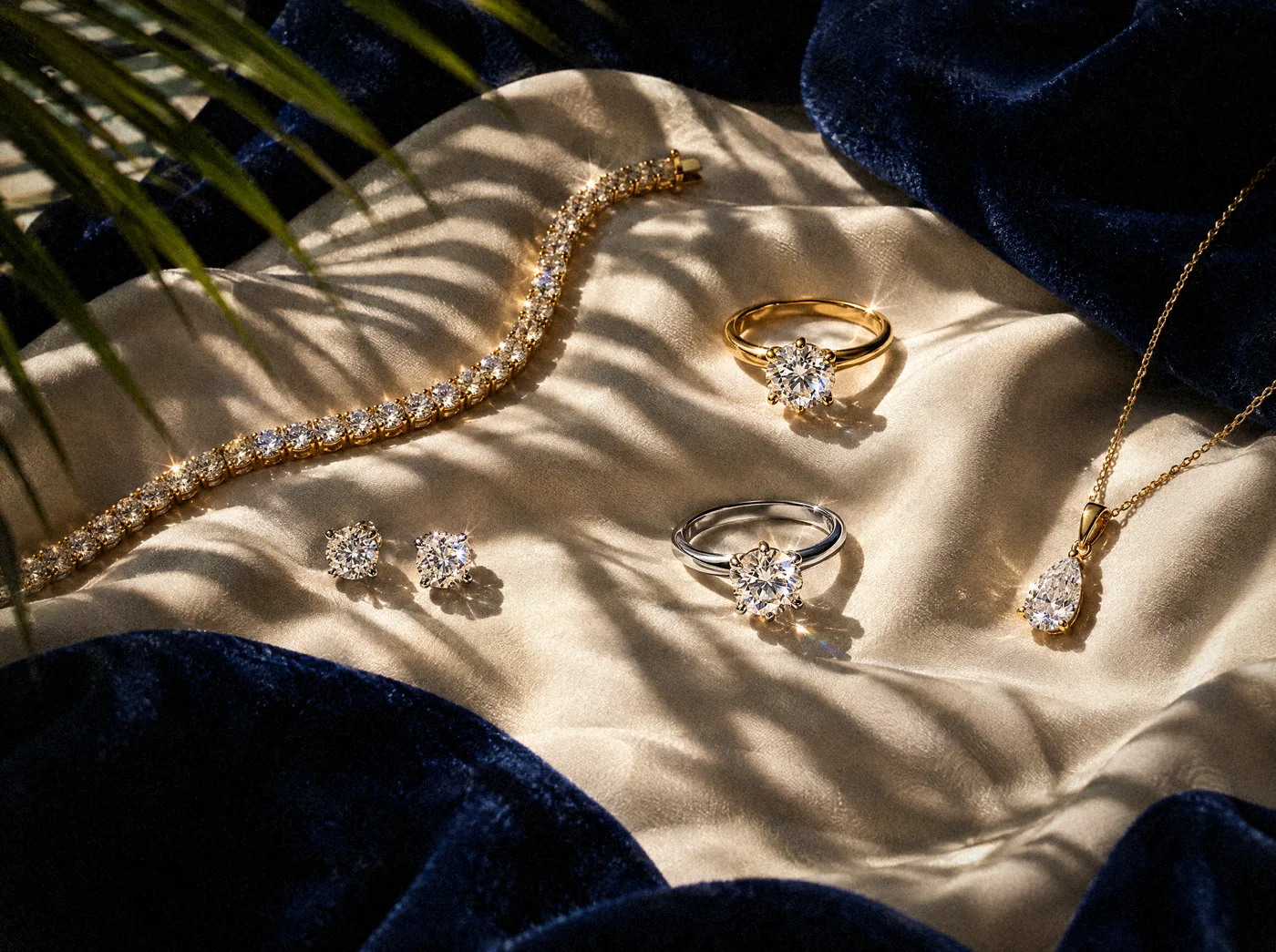
See custom jewelry manufacturing for what we can make, including special shapes, motifs, engraving and stone settings.
What should the card and pouch say?
What the charm means and what it's made of. Packaging is made in your shop's branding, so the shopper sees your name, never ours.
- The story. One or two lines on the motif. Why this flower? Why these coordinates?
- The metal, described correctly. In the US, "sterling silver" means at least 925 parts per thousand pure silver under 16 CFR 23.5. "Vermeil" means sterling silver coated with gold of at least 10 karat and at least 2.5 microns thick under 16 CFR 23.4, as of October 2026.
- The stone, if there is one. Always "lab-grown diamond", never just "diamond".
- Care. One line on cleaning and storage.
For the difference between vermeil, gold filled and plated, read gold vermeil vs gold filled vs plated.
How should you price custom charms for retail?
From your landed cost, not from the keychain price points beside the register. Landed cost is everything it takes to get one charm onto your shelf.
- Add up landed cost per piece. The charm, card and pouch, shipping, import duties and taxes, and payment fees.
- Apply your markup. Use the method you use for the rest of your better goods, and keep it consistent across the range.
- Check the shelf. Compare with fine charms in the same metal your shoppers can buy nearby or online.
- Step the metals. Silver, vermeil and gold versions of one design should step up clearly, so shoppers can trade up at the counter.
- Review after the first reorder. Once you've seen a season's sell-through, push the winners and drop the rest.
Duties depend on where you are. US shops should read jewelry import duty from India to the US. Australian shops should read import jewellery from India to Australia.
Can you put a landmark or logo on a charm?
Only if you own it or have written permission. Some landmark names, building images and official symbols are registered trademarks. The National Park Service arrowhead, for example, is the NPS's registered service mark, and its use must be authorized by the NPS Director.
Museums and attractions selling their own icon are the exception. They can brief their own building or logo, as long as they hold the rights. For everyone else, nature, coordinates and town names are the safer place to start, and frankly they often sell better because they're about the place, not a brand.
Next step
Browse the lookbook for ready charm and pendant designs, or send a brief with your sketch or photo. If you want to plan a full range before next season, book a call.
Questions founders ask
What is the minimum order for custom charms?
At Grandior there is none. You can order one piece per design, check how it sells and reorder in small numbers. The cost per piece is higher than a bulk factory run, but you hold no unsold stock.
How much does it cost to design a custom charm?
CAD starts from $55 per design, and complex designs from $250. The design belongs to your shop once it is paid for. Production prices are quoted per design.
Can I put a famous landmark on a souvenir charm?
Only if you have the right to use it. Some landmark names, images and symbols are registered trademarks, such as the National Park Service arrowhead. Search the trademark database for your country and get written permission where needed.
What metal is best for souvenir charms?
925 sterling silver is the usual starting point. Gold vermeil gives a gold look on a silver base, and solid 10K or 14K gold suits a premium line. Pick the metal your shoppers will pay for and keep it consistent across the range.
How do I price custom charms for retail?
Start from your landed cost per piece, including the charm, packaging, shipping, duties and card fees. Apply your markup, then check the result against comparable fine charms your shoppers can buy nearby.
Are gold vermeil charms real gold?
Vermeil is sterling silver coated with real gold. Under the FTC Jewelry Guides, as of October 2026, it must be at least 10 karat gold and at least 2.5 microns thick. Describe it as vermeil, not as solid gold.
Sources
Checked on October 31, 2026. Rules and rates change, so confirm with the source before you rely on a number.
- FTC Jewelry Guides, 16 CFR 23.4, Misuse of the word vermeilecfr.gov
- FTC Jewelry Guides, 16 CFR 23.5, Misrepresentation as to silver contentecfr.gov
- National Park Service, Requesting permission to use the NPS Arrowheadnps.gov
- USPTO, Search our trademark databaseuspto.gov
- IP Australia, Australian Trade Mark Searchsearch.ipaustralia.gov.au
Get new guides by email
Practical guides for jewelry brands, from what we see on real orders. Only new guides; unsubscribe any time.